
Feelings Words for Kids: Beyond Mad, Sad, Happy
Teaching kids precise feelings words does more than build vocabulary — it literally calms the brain. Here's the science and five things you can do tonight.
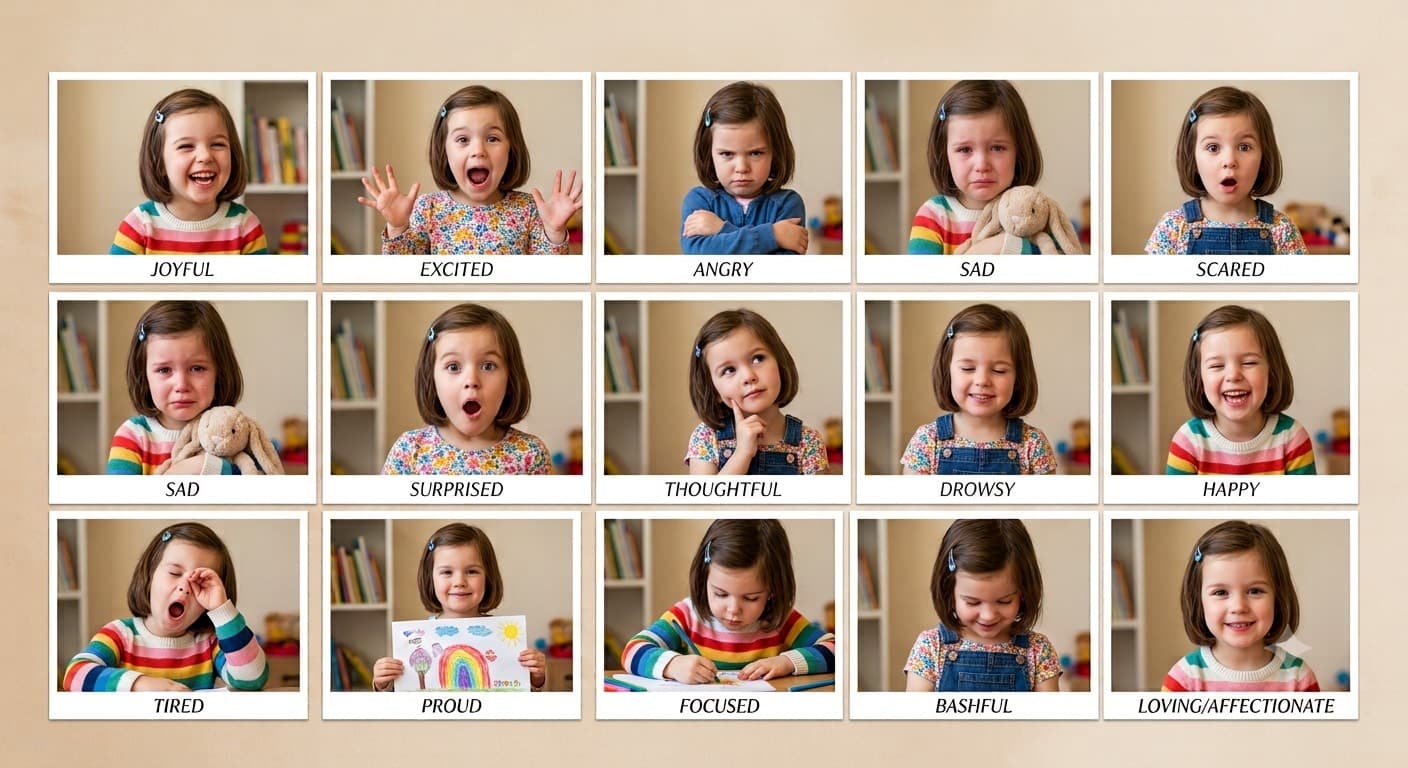
Quick answer: Teaching children precise feelings words — frustrated, embarrassed, overwhelmed — beyond the basics of mad, sad, and happy gives their brains a genuine regulation tool, not just a label. Research shows that naming a feeling reduces activity in the brain's threat centre and that a richer emotion vocabulary predicts better friendships and fewer anxiety symptoms in the preschool years. The good news: you can start building it in ordinary moments tonight.
The Surprising Thing "Mad" Can't Do for Your Child
Here is something that trips up almost every well-meaning parent: when your child says "I'm mad" and you calmly ask "Are you sure you're not just tired?", you are not being unhelpful. You are actually on the right track — you just need one more word.
Because "mad" is a blunt instrument. It is the butter knife of the feelings vocabulary drawer. It does a job, but it cannot do the precise job that "frustrated," "jealous," "embarrassed," or "disappointed" can do. And that precision, it turns out, is not just about sounding more articulate. It is about what happens inside your child's brain in the middle of a big feeling.
This is what the science of feelings words for kids is revealing — and it changes the way a bedtime story, a car-ride chat, or even a tantrum recovery looks.
What the Research Actually Shows
Knowing the right word is a regulation tool
In 2020, Streubel and colleagues published a study in the Journal of Experimental Child Psychology that followed preschool-age children and measured their emotion-specific vocabulary — the words they actually had for feelings, separate from their general language skill. What they found was striking: the size of a child's emotion lexicon specifically predicted their emotion regulation knowledge. More feelings words meant better ability to understand and manage feelings, independently of how verbally able the child was overall.
In other words, it is not enough for a child to be a good talker. They need the right words.
The brain science behind "name it to tame it"
A landmark neuroimaging study by Lieberman and colleagues (2007) showed why. When people labelled a negative emotion — put it into words — activity in the amygdala, the brain's alarm system, went down. Activity in the right ventrolateral prefrontal cortex, the part involved in braking emotional responses, went up. The two regions moved in opposite directions: more language, less alarm.
That is the neuroscience of why name it to tame it is not just a catchy phrase. When your child finds the precise word for what they feel, their nervous system gets a signal that the brain can process this. Vague distress becomes something with a shape — and something with a shape can be worked with.
More words, better friendships, fewer worries
A meta-analysis by Trentacosta and Fine (2010) pulled together 63 studies and found that emotion knowledge correlated with social competence and inversely with internalising problems — anxiety, low mood — in children across the preschool and school years. A longitudinal study by Denham and colleagues (2003), following 143 children from ages 3–4 through to kindergarten, found that richer emotion knowledge at preschool age predicted how well teachers and peers rated those same children's social functioning later.
The feelings vocabulary your child builds at age four is still paying forward at age six.
The window is longer than you think
A 2021 study by Grosse and colleagues tracked emotion word production in children aged 4–11 and found a steady increase with age — but also found that even 10–11-year-olds were still far from adult-like in their emotion vocabulary. This is reassuring news: there is a long developmental window here. The preschool and early school years are an early, important phase — not the only phase. Wherever your child is right now is the right place to start.
Five Things You Can Do With Feelings Words Today
1. Validate first, then offer a richer word
When your child says "I'm mad," don't correct them — expand. Try: "You're really mad — it sounds like you might also be disappointed, because you were so excited about that." This keeps emotional safety intact (Gottman's emotion-coaching research is clear that dismissing or minimising a feeling backfires) while quietly adding a new word to their mental library. Emotion coaching research consistently shows that the label-first approach — name the feeling before addressing the behaviour — makes children more receptive, not less.
2. Try an "Emotion Word of the Week"
Pick one precise feeling — nervous, proud, cozy, relieved, jealous — and use it naturally across the week. Mention it at breakfast ("I feel a little nervous about my meeting today"), at bedtime ("Were you proud of yourself when you did that?"), in passing. Vocabulary research shows that repeated, varied exposure across real contexts is how words stick. By Friday, your child will probably use it back at you.
3. Pause and wonder during story time
While reading together, stop at a character's hard moment and ask: "How do you think she feels right now?" Whatever your child says, follow it with an expansion: "Yes — and maybe she feels a bit left out too, like nobody remembered her." Studies on dialogic reading show this kind of conversation around books significantly increases emotion vocabulary in preschoolers — and a 2023 study by Schoppmann and colleagues found children can transfer emotional strategies they encounter in a picture book directly into real-life situations.
4. Use the energy-and-pleasantness trick
The RULER programme at Yale's Center for Emotional Intelligence teaches children to place feelings on a simple grid: high or low energy, pleasant or unpleasant. You don't need the formal tool. Just asking "Does it feel big and buzzy or heavy and quiet? Does it feel okay or not okay?" helps a child pinpoint an emotion before they have the exact word for it — and gives you the clue for which word to offer next.
5. Name your own feelings out loud
Children learn emotion vocabulary the same way they learn any vocabulary: by hearing it used by the people they love, in context, repeatedly. When you say "I'm feeling a bit overwhelmed right now, I need a minute" or "I'm really relieved we made it on time", you are doing active feelings-word teaching without a lesson plan. No flashcards required.
How Stories Become Feelings Word Classrooms
There is a reason children ask for the same book seventeen nights in a row. Story repetition is not stubbornness — it is vocabulary acquisition at work. Each re-read, they catch something new: a word, a face, a feeling they recognise.
The research backs this up meaningfully. A controlled study of 4–5-year-olds found that a structured picture-book intervention over eight weeks produced significantly greater gains in emotion regulation compared to children who weren't read to with that intention. The stories were not magic — the pause, the conversation, and the repeated, caring exposure to feelings words in context were.
This is also why co-regulation — a parent staying calm and present alongside a child in a hard moment — works so well alongside feelings-word teaching. The regulated adult, the warm story, the precise word: they all carry the same message to a child's nervous system. This feeling has a name. It is not too big. We can be in it together.
A personalized story — one where the child on the page shares your child's name, their world, their particular big feelings — turns that message up to full volume.
Frequently Asked Questions
What feelings words should I teach my child first?
Start with one precise word that fits your child's most common big feelings. "Frustrated," "disappointed," and "nervous" are great early additions to mad, sad, and happy — they name experiences most 3–7-year-olds meet regularly.
At what age can kids learn more specific emotion words?
Children as young as 3–4 can learn precise feelings words when adults introduce them naturally in context. Research shows the emotion vocabulary window stays open well past age 10, so wherever your child is right now is the right place to start.
How do feelings words help kids calm down?
Naming a feeling activates the prefrontal cortex and reduces amygdala activity — the brain's alarm response. That is the neuroscience of why putting a precise word to a big feeling can visibly settle a child mid-meltdown.
How many emotion words does the average child know?
Researchers found that even 10–11-year-olds produce emotion vocabulary patterns far from adult-like, which means deliberate, ongoing teaching across childhood matters — especially in the preschool years when the foundation is built.
Do picture books really help kids learn feelings words?
Yes. Controlled studies show that structured picture-book reading significantly increases emotion vocabulary, and children can transfer emotional strategies encountered in a story to real-life situations — making books one of the most natural and effective feelings-word tools available to parents.
Frequently asked questions
1.What feelings words should I teach my child first?
Start with one precise word that fits your child's most common big feelings — 'frustrated,' 'disappointed,' or 'nervous' are great early additions to mad, sad, and happy.
2.At what age can kids learn more specific emotion words?
Children as young as 3–4 can learn precise feelings words when adults introduce them in context. Research shows the emotion vocabulary window stays open well past age 10, so it's never too early — or too late — to start.
3.How do feelings words help kids calm down?
Naming a feeling activates the prefrontal cortex and reduces activity in the amygdala — the brain's alarm centre — which is why putting a word to a big feeling can visibly settle a child mid-meltdown.
4.How many emotion words does the average child know?
Researchers found that even 10–11-year-olds produce emotion vocabulary patterns far from adult-like, which means explicit, ongoing teaching matters throughout childhood — especially in the preschool years.
5.Do picture books really help kids learn feelings words?
Yes. Controlled studies show that structured picture-book reading significantly increases emotion vocabulary and that children can transfer emotional strategies learned from a story to real-life situations.
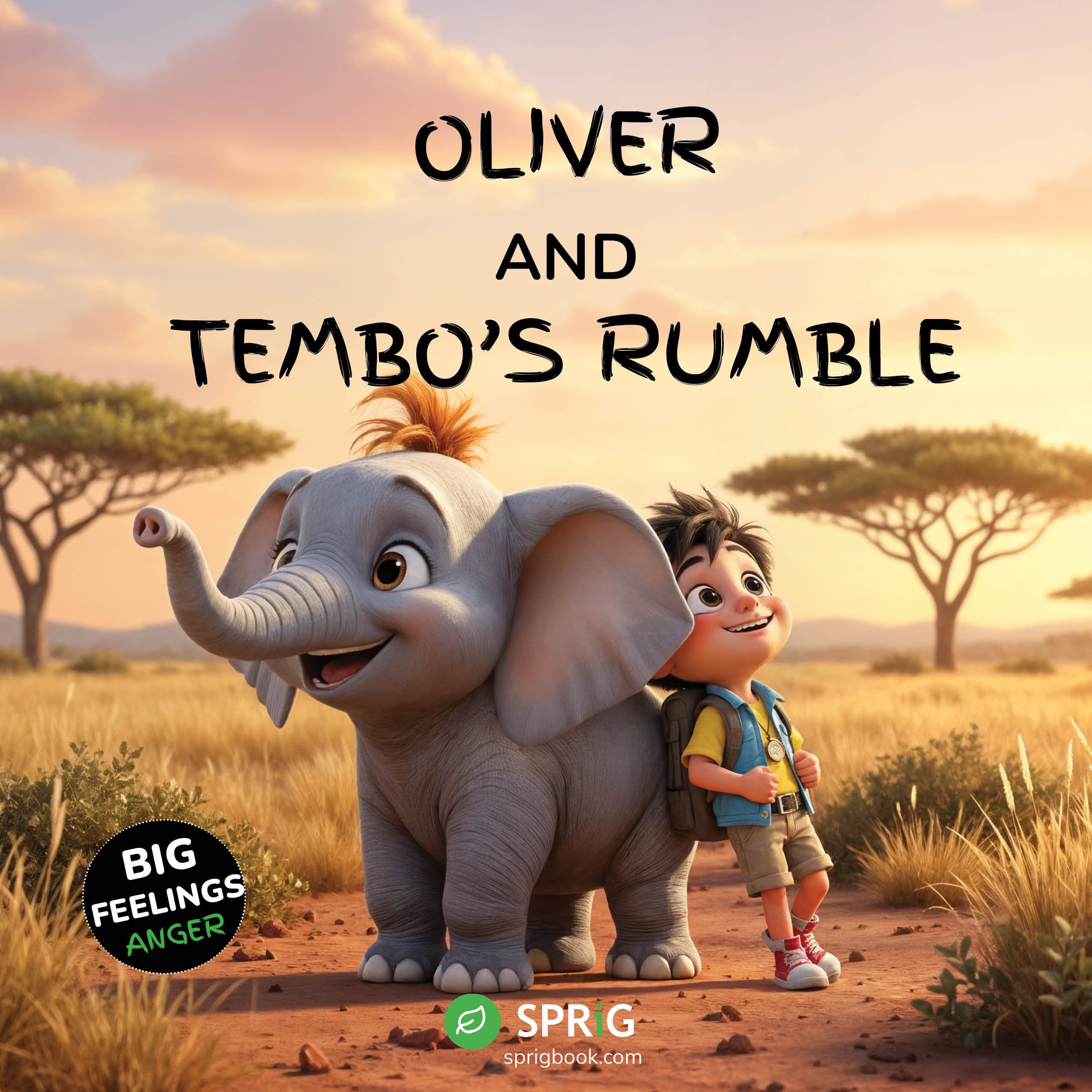
Ready to Create Your Child's Story?
Every Sprig book is personalized to your child's specific emotional needs — backed by the research you just read about.
Create Your Book